Search engine optimization is no longer just about keywords and backlinks. In 2026, SEO has evolved into something far more dynamic—powered heavily by artificial intelligence.
From content creation to keyword research and optimization, AI is transforming how we write, rank, and reach audiences. But here’s the catch: using AI blindly won’t get you results. Using it strategically will.
In this guide, we’ll break down everything you need to know about SEO writing with AI – how it works, the best tools, real workflows, and how to actually rank (not just generate content).
What is SEO Writing with AI?
SEO writing with AI refers to the process of using artificial intelligence tools to create, optimize, and refine content so it ranks higher on search engines like Google.
Instead of manually researching keywords, drafting content, and optimizing it, AI tools can:
- Suggest high-ranking keywords
- Generate content outlines
- Write blog drafts
- Optimize readability and structure
- Improve on-page SEO
But remember—AI is a co-pilot, not the driver.
Why AI is Changing SEO Forever
Let’s be real—Google itself is now AI-driven. So if you’re not using AI, you’re already behind.
Here’s why AI matters:
1. Speed + Scale
You can generate 10 blog drafts in the time it used to take to write one.
2. Smarter Keyword Insights
AI tools analyze search intent, not just keywords.
3. Better Content Optimization
AI understands structure, readability, and engagement patterns.
4. Competitive Edge
Your competitors are already using AI. The question is—are they using it better than you?
Step-by-Step: How to Do SEO Writing with AI
Let’s break it down into an actual workflow you can follow.
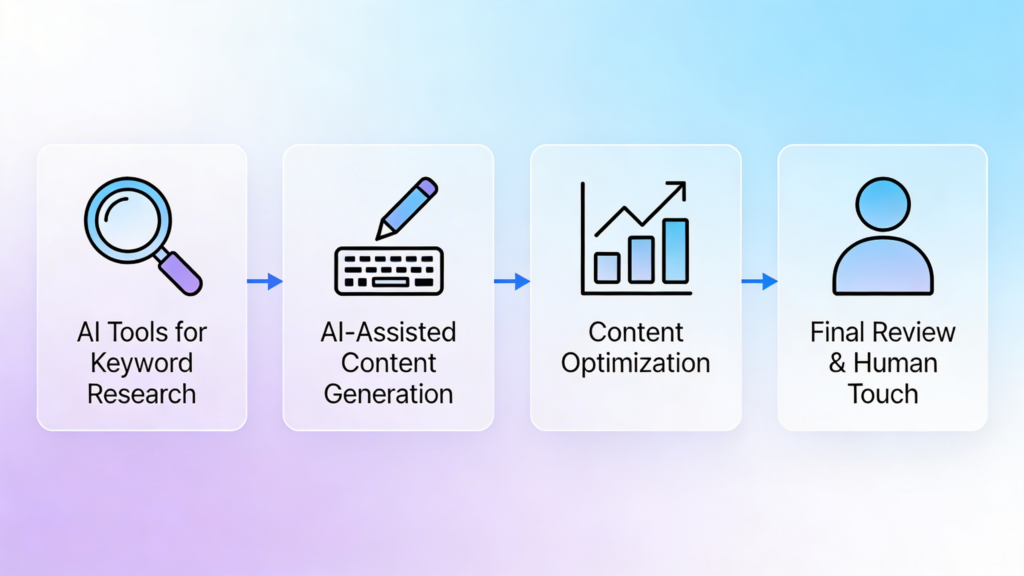
Step 1: Keyword Research Using AI
Start with tools like:
- ChatGPT
- Ahrefs
- SEMrush
- Ubersuggest
Instead of just searching keywords, ask AI:
Example Prompt:
“Give me high-intent keywords for SEO writing with AI, including long-tail variations and search intent.”
You’ll get:
- Primary keyword
- Long-tail keywords
- Related queries
- User intent insights
👉 Focus on:
- Informational keywords
- Low to medium competition
- High intent queries
Step 2: Build a Content Structure
Before writing anything, create a solid outline.
Example Prompt:
“Create an SEO-optimized blog outline for ‘SEO writing with AI’ with H1, H2, and H3 structure.”
This helps you:
- Cover all important topics
- Improve readability
- Increase chances of ranking
Step 3: Generate Content (But Don’t Copy-Paste Blindly)
Now comes the fun part—content generation.
Use AI to:
- Write sections
- Expand ideas
- Add examples
But here’s the golden rule:
👉 Edit like a human. Think like a user.
Avoid:
- Robotic tone
- Repetitive phrasing
- Generic content
Step 4: Optimize for SEO
Once your draft is ready, optimize it.
Key elements to check:
✔ Keyword Placement
- Title
- First 100 words
- Headings
- Throughout content (naturally)
✔ Internal Linking
Link to related blogs or service pages.
✔ Meta Tags
Create:
- SEO title (under 60 characters)
- Meta description (under 160 characters)
✔ Readability
Use:
- Short paragraphs
- Bullet points
- Clear headings
Step 5: Add Human Value (This is Where You Win)
AI can generate content, but it can’t replace:
- Personal insights
- Real examples
- Unique opinions
Add:
- Case studies
- Real workflows
- Industry insights
This is what makes your content rank—and stick.
Best AI Tools for SEO Writing
Here are some top tools dominating the space:
🔹 ChatGPT
Best for content creation, outlines, and ideation.
🔹 Surfer SEO
Great for on-page optimization and keyword density.
🔹 Jasper AI
Focused on marketing copy and blog writing.
🔹 Frase
Perfect for content briefs and SEO research.
🔹 Grammarly
For polishing grammar and tone.
Common Mistakes to Avoid
Let’s save you from rookie errors:
❌ 1. Publishing AI Content Without Editing
Google can smell low-quality content from miles away.
❌ 2. Keyword Stuffing
More keywords ≠ better ranking.
❌ 3. Ignoring Search Intent
If your content doesn’t match what users want, it won’t rank.
❌ 4. No Original Value
If your blog sounds like 100 others, it’ll get buried.
SEO Writing with AI: Best Practices
If you want results, follow these:
- Use AI for research + drafting, not final output
- Focus on search intent first, keywords second
- Write for humans, optimize for search engines
- Keep updating content regularly
- Combine AI with real expertise
The Future of SEO Writing
We’re moving toward Generative Engine Optimization (GEO)—where content is optimized not just for search engines, but for AI tools like ChatGPT, Gemini, and Perplexity.
This means:
- Clear, structured content
- Direct answers to questions
- High authority and trust signals
Basically, your content should be:
👉 Easy to read
👉 Easy to understand
👉 Easy to extract answers from
Final Thoughts
SEO writing with AI is not about replacing writers—it’s about upgrading them.
The real winners will be those who:
- Use AI smartly
- Add human creativity
- Focus on value over volume
Because at the end of the day, Google ranks helpful content, not just generated content.
🚀 Work with AI SEO Experts on Truelancer
Want to scale your SEO content without compromising quality?
Truelancer connects you with top freelancers skilled in:
- AI-powered content writing
- SEO optimization
- Blog creation & strategy
- Keyword research & content planning
👉 Hire expert SEO writers today: https://www.truelancer.com